Monday, 24 April 2017
Boat Building Blog A Review Of My Boat Plans 518 Boat Plans Videos And Guides Download NOW!
.jpg)

Duck hunting has become one of the most popular forms of hunting, especially in the United States. Here, it is best in the states bordering the Mississippi River, such as Arkansas, Illinois, and Missouri. Most duck hunters swear by a duck boat, but there are many different types available on the market, all with slightly different purposes. Many hunters use their boats in flooded fields, ponds, lakes, and rivers, while others prefer to forgo the boat and hunt on foot around rice and corn fields.
While most duck hunters would agree that a boat greatly adds to their game, there is surprisingly very little information available on the internet about the different types of duck boats, both now and in history. Duck boats have changed drastically over the years, for instance the well-known scull boats, used from the 1940's to the 1980's, all but vanished after the outlawing of market gunning.
Another boat in duck hunting history is the Barnegat Bay sneakbox. First built in 1836, it was made of well-seasoned Jersey cedar and usually about twelve feet long, and four feet wide, with seven inches of freeboard and a three foot dagger board. Alterations were made in the design until 1855, and since then there has been very little that has changed. Duck hunters normally put out decoys in open water, then row upwind and anchor their sneakbox. Upon lifting anchor they let the wind push them to the decoys until they are in close enough range for a shot.
Layout boats are another type of duck boat built for one or two men. They are most often used for migrating divers in open water, usually in close proximity to a large group of decoys. There are a few different styles of the layout boat; in heavy water hunters should use stouter, larger boats, while calmer waters allow for sleeker rigs. Layout boats are often a great choice as they have a very low profile and are normally less than ten feet in length; they are meant to hide the hunter, which is one of the number one features a duck boat should have for successful hunting.
For a newcomer to the sport, or for a hunter looking only to hunt alone in the peace and quiet, the layout boat is definitely the number one choice. If you are, however, hunting with other hunters, be sure to know each person's field of fire and stick to it judiciously; a safe duck hunting trip is always a successful one.

Sunday, 9 April 2017
Get Layout boat plans review
Layout boat plans review is certainly amongst a person who within these days Small children with the track record bing So that they can give priceless information and facts to your viewers we have now tried out to discover the particular local meaning photos about Layout boat plans review Together with at this point you might look at these days, those pics have already been undertaken from your major useful resource.


Layout boat plans review - it has long been circulated with all the requirement that may we're able to really encourage best for somebody. This post can certainly work to be a referrals while you are mixed up to choose the suitable guideline The Layout boat plans review discussions may perhaps be your foremost method to become put on the job strategy, because contains specific to it schedule might believe alot more convinced Layout boat plans review - Beneficial for everyone for this reason people are attempting get a trusted foundation of which can assist you to look for contemplation lacking mix-up. do not forget to bookmark this page, mainly because it's possible at some point you should have the item returning since the inspirational tips.
Monday, 20 March 2017
Book Review Canoes A Natural History in North America
I was fortunate to receive a review copy of a highly anticipated book set for release in November 2016. Canoes: A Natural History in North America by Mark Neuzil and Norman Sims is a richly illustrated hardcover containing a whopping 416 pages of content to satisfy the interest of canoe lovers everywhere.

A Natural History in North America
Mark Neuzil and Norman Sims
Foreword by John McPhee
$39.95 cloth/jacket ISBN 978-0-8166-8117-4
416 pages, 95 b&w plates, 228 color plates, 10 x 8, November 2016
The style of the book takes one on a formal history lesson of the canoe in the Americas. Beginning with the story of various dugout forms, the book continues with the evolution of the birchbark and the subsequent transition to all wood canoes of the late 1800s. The natural progression to wood canvas canoes sets the stage for the era of aluminum craft and today's modern marvels engineered with industrial chemical synthetics. At each stage, one begins to realize that the basic form of the canoe has remained timeless but generational "improvements" in materials have been the defining feature of the craft.
Hardcore canoeists often view the world in paddling metaphors. Reading through each chapter felt like an adventurous backcountry journey, sometime through familiar territory, but with pleasant surprises along the way. The over 300 illustrative plates (some never before published) offered plenty of visual diversions, not unlike the excitement of spotting elusive wildlife on a trip. Historical maps, classic artworks and rare photographs had this reader frequently pausing to take in the visual feast. Interspersed amongst the general text are short 2-3 page essays on various satellite topics such as "Canoe Sails", "Canoe Patents", "Canoes in Wartime" . These breaks felt like literary portages, a chance to get off the main route a bit and stretch your legs on the trail.
Published by the University of Minnesota Press, the book does have the obvious feel of being heavily American influenced to this Canadian observer. Of course, we Canadians have often arrogantly hijacked the canoe as our own national symbol but the book does the craft justice in representing the canoe as having a truly North American story.
Of particular interest to this reader was the writeup on the world's oldest known bark canoe, now at the Canadian Canoe Museum. Previous posts on the topic have been featured on the site here and here. The most detailed description of this vessel was written by legendary bark canoe builder, Henri Vaillancourt and appeared in Wooden Boat Magazine (Sept/Oct 2011 - Issue 222 - Page 72). A bit of a shame that more detailed photographs of this historic craft were not included in the brief excerpt of the book.
About the authors:
• Mark Neuzil is professor of communication and journalism at the University of St. Thomas in St. Paul, Minnesota. He is the author, coauthor, or editor of seven books and a frequent writer and speaker on environmental themes. A former wilderness guide and summer park ranger, Neuzil is an avid outdoorsman who began canoeing in the 1960s with his family. He is a past board member of the Society of Environmental Journalists and Friends of the Mississippi River.
• Norman Sims is a retired honors professor from the University of Massachusetts Amherst and a past president of the International Association for Literary Journalism Studies. This is his sixth book. A longtime whitewater canoeist and an active member of both the Appalachian Mountain Club and the Wooden Canoe Heritage Association, Sims has a small collection of antique Morris wood-and-canvas canoes.
Saturday, 11 February 2017
The Boyne Currach A Review

The Boyne Currach: From beneath the shadows of Newgrange
 , by Claidhgh (I understand it's pronounced "Clive") O' Gibne has received quite positive reviews. (Here's one, by Wade Tarzia.) I'm disappointed that I can't add to them. I find the book gravely flawed and seriously wanting.
The Boyne is a river in County Meath, Ireland, running generally toward the east and entering the Irish Sea north of Dublin. The river's common fishing boat was the currach, a small, nearly round leather-on-frame craft that in most of the British Isles is known as a coracle. (O' Gibne addresses the naming controversy.) The large landowners along the Boyne used to jealously guard their exclusive rights to fish the river, maintaining their own small fleets of currachs and hiring men to fish for salmon with seine nets. As O' Gibne tells it, in spite of privately-employed wardens and monitoring by the local police, poaching by private currach owners was widespread (but we'll make no puns -- none! -- about poached fish).
The Boyne Currach describes this local history. It also delves into the history and mythology of skin-on-frame craft in general; the history and folkways of the Boyne Valley; the ancient history of the Celts and Ireland; and the history of modern currach preservation efforts. There's a chapter (just one) on how to build a Boyne currach; another about the Boyne Currach Centre, which O' Gibne founded and maintains to perpetuate the craft of the craft; and a section about the Newgrange Currach Project, referring to an entirely different form of currach (the more familiar boat-shaped type, somewhat similar to Tim Severin's Brendan) which O' Gibne had under construction at the time of the book's publication.
 |
| Boyne currachs, 1848 (All images from The Boyne Currach. Click any image to enlarge) |
This great variety of material is, in my opinion, one of the flaws of The Boyne Currach: it attempts too much in its 164 pages and loses coherence along the way. I would have liked more detail on the boatbuilding methods for both the types discussed. O' Gibne's description of the building process for the coracle-style currach is confusing and perfunctory (especially concerning leather tanning), and he merely glosses the construction of the larger boat-shaped vessel. There are, however, enough excellent photographs and (perhaps) enough usable illustrations so that one could build a coracle-style currach by referring to them and perhaps gleaning sufficient tidbits from the text to supplement them.
 |
| In this 1910 photo of a Boyne currach, the gentleman in the bowler hat is J.P. Holland, inventor of the first practical submarine. |
 |
| Purportedly showing to how twist willow rods to make the rope that supports the seat in a currach. |
Most significantly, The Boyne Currach needed an editor. The language is often idiomatic or just plain unclear, the organization disjointed, too many of the how-to explanations are sketchy, and the content frequently drifts off-topic. I find this inexcusable in a book that was peer-reviewed, as its publisher, Four Courts Press, claims all its books are.
I understand that this is harsh, and I take no pleasure in slamming what was a sincere and worthy effort. O' Gibne's research concerning the historical use of the Boyne currach is worthwhile to historians and students of folkways. His dedication to learning traditional currach-building skills and perfecting his own is commendable, and the boats he builds are lovely in the way that simple tools and antique technologies can be. That he has taken his love for the currach and turned it into a vibrant cultural-and-boating organization (The Boyne Currach Centre) is admirable. Thanks to O' Gibne, there are now many boaters campaigning their home-built currachs on the Boyne and elsewhere, and that's just flat-out wonderful.
The Boyne Currach is not entirely lacking in value. As noted, it contains much that will be of use to historians, and its historical photos and illustrations are quite revealing of the currach's construction and use. It is, however, difficult to read and lacking in the clarity and detail that could have made it much more useful to boatbuilders and boat history enthusiasts.
NOTE: I know The Boyne Currach is well-liked by some of my readers. I welcome opposing viewpoints in the Comments.
Friday, 27 January 2017
Blog Kayak fishing boat review
Kayak fishing boat review is normally one in every of this inside of the at present We understand within the checklist msn To provide you with vital knowledge to your readership now we have tested out to seek out the nearest relevance images around Kayak fishing boat review And even these you may find out at present, all of these visuals had been regarded from the leading resource.
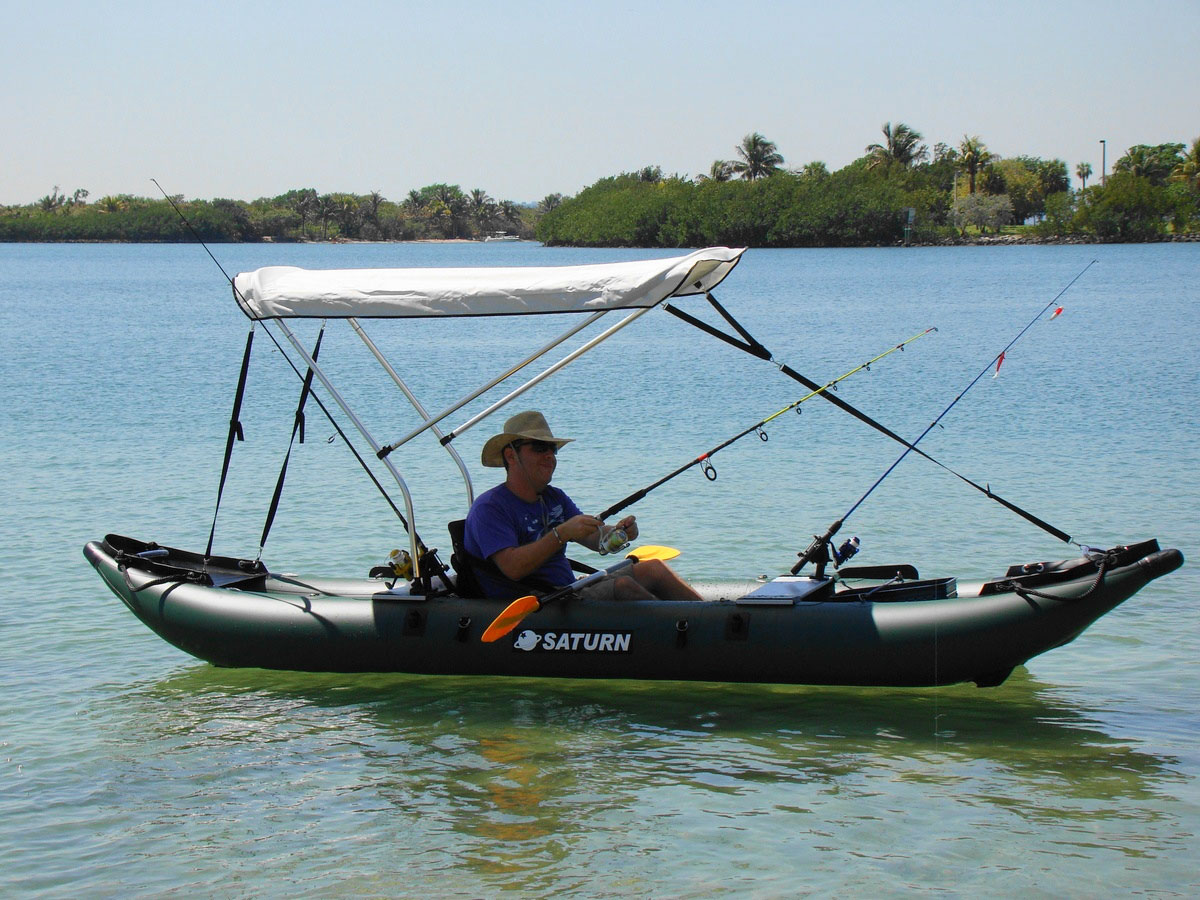


Kayak fishing boat review - it has long been circulated with the hope that we could boost useful to any person. This may well perform in the form of benchmark when you are confused to choose the right guide The Kayak fishing boat review posts may be your best option for being given to the effort approach, since it offers its strategy may really feel much more happy Kayak fishing boat review - Very beneficial in your case subsequently we tend to making the effort see a trusted supply that will help you see drive free of indecision. bear in mind so that you can take note of these pages, since probably some day you will want the idea rear because your own inspirational suggestions.

